
From artificial intelligence to sustainable aviation fuel, we look at how technology is helping the aviation industry.
The aviation sector is always on the lookout for new technology to make operations more efficient and profitable. While the last few years were quite rocky for the industry, there have also been several technological advancements that are propelling it forward.
From artificial intelligence to sustainable aviation fuel, airlines and airports are trying to adopt the latest tech as they plan their future and keep up with changing times and requirements to stay competitive.
Airline operations
While AI is not a new buzzword, and the tech has been around for many years, recent advancements and tools such as ChatGPT, among others, have made every industry take it more seriously.
Carriers are using artificial intelligence in operations processes, such as managing aircraft fuel consumption through better navigation of weather and traffic conditions. AI and machine learning are also driving the Aircraft Interface Device Market (AID).
AIDs help link critical data from aircraft, such as their avionics systems and other external systems, and enable efficient processing of such information and data. This market is witnessing significant demand as customers want new aircraft to have these connected devices with several important systems.
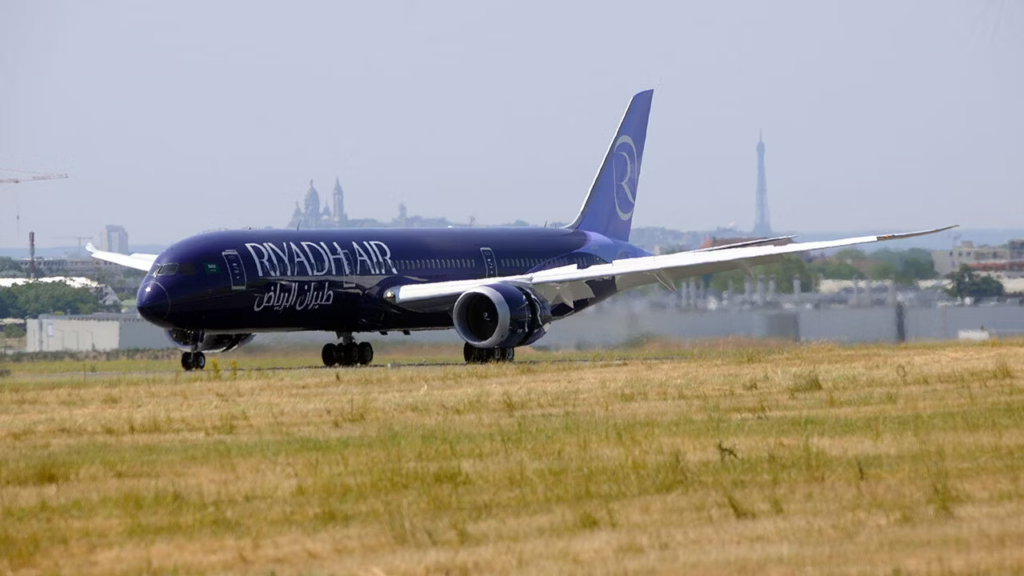
Airlines are increasingly relying on AI to stay competitive. For example, American Airlines is using machine learning to reduce taxi time by 20%. Even Riyadh Air, which is yet to start its business, is already collaborating with companies to streamline its future operations.
It recently announced a strategic collaboration with Artefact, which deals in data and AI transformation services. The partnership will involve developing a data analytics platform and crafting AI solutions for the airline’s key business areas. These include personalizing passenger experiences, and making flight and ground operations more efficient with real-time insights, among other things.
Many companies are busy developing tech to help air travel become safer. One example is Austria-based startup Turbulence Solutions, which is developing technologies to make flight smoother by eliminating up to 80% of turbulence.
At airports
In the US, eligible passengers at some airports can now use Mobile Passport Control (MPC), which allows them to submit their travel documents, photos, and customs declaration information through a free, secure app. This helps reduce inspection time at passport control, and passengers can avoid waiting in long lines at airports.
Facial recognition is another feature that is increasingly being used at airports around the world. The Transportation Security Administration (TSA) introduced it at some airports, giving the traveler the option to use their face to verify their identity during the screening process by presenting their physical identification or passport.

India uses this tech at select airports called DigiYatra. It enables passengers to preload their travel information and identification through an app, saving time at airport check-ins and security.
Sustainable Aviation Fuel
Of course, another big example of the aviation sector adopting tech is its increasing use of sustainable aviation fuel (SAF). While nowhere near the levels to replace traditional fuel, SAF is increasingly becoming a priority for many airlines.
Emirates recently activated its fuel agreement with SAF producer Neste at Amsterdam Schiphol Airport (AMS), while Cathay Pacific set new interim carbon emission reduction targets for 2030 that will see it accelerate SAF usage. IAG airlines are also looking to use one million tonnes of SAF annually by 2030.
The hope is that SAF technology will advance to a stage where production levels increase significantly, enabling a more widespread and cost-effective use of non-traditional fuels.
Source: https://simpleflying.com/technological-advancements-aviation-industry/