
Hawker Siddeley was one of Britain’s largest aircraft manufacturers, especially prominent in the 1960s and 1970s. It was an aviation pioneer of its time but had to undergo a whole range of mergers and acquisitions to remain competitive in the aviation industry. For most of its existence, aircraft were not produced in their name but under the subsidiary’s name. Let’s find out more about this famous manufacturer.
Early days
Hawker Siddeley Aircraft was formed in 1935 when Hawker Aircraft purchased the companies of J.D. Siddeley which included Armstrong Siddeley which produced automobiles and engines, and aircraft manufacturer Armstrong Whitworth Aircraft. At the same time, Hawker Siddeley acquired A.V. Roe & Company (AVRO), the Gloster Aircraft Company (Gloster) and Air Training Services.
Importance in World War II
Somewhat surprisingly, all the companies produced their own aircraft designs under their own name as well as working together under the Hawker Siddeley Aircraft name.
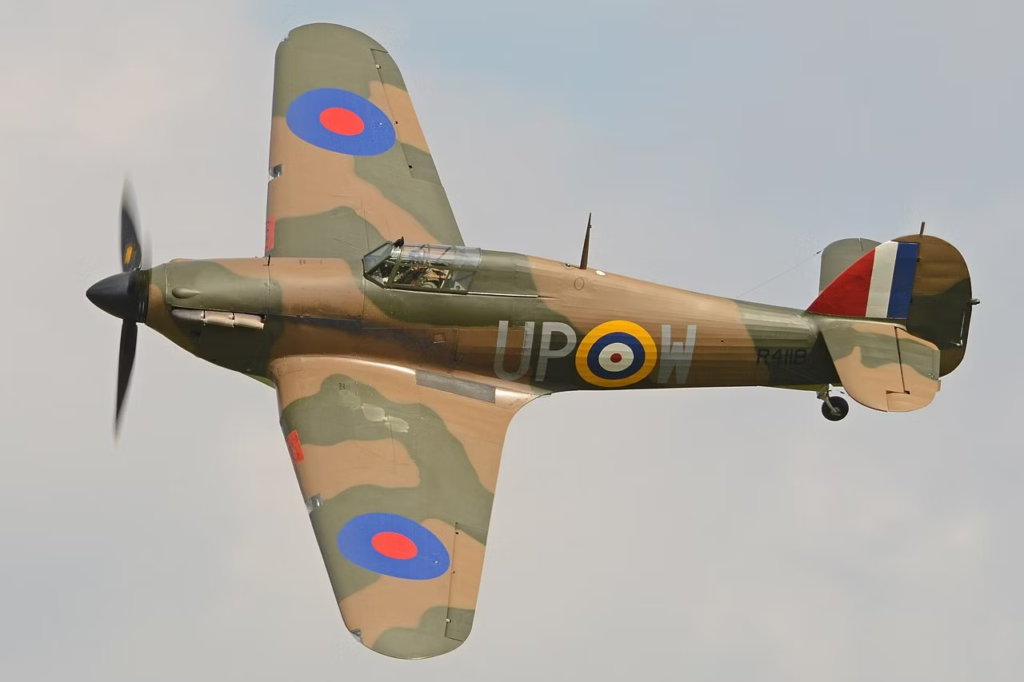
During World War II, the company became crucial to the war effort, producing a number of designs including the Hawker Hurricane fighter aircraft that famously flew alongside the Supermarine Spitfire on the front line during the Battle of Britain. Over 14,500 Hurricanes were produced.
Introduction of Avro Canada
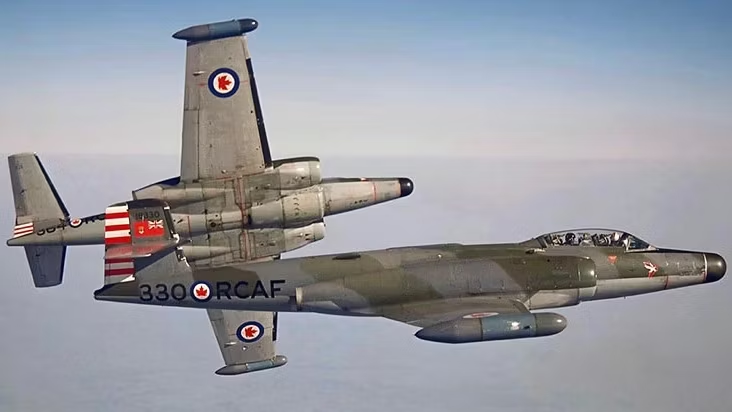
In 1945, Hawker Siddeley bought Victory Aircraft and renamed the company A.V.Roe Canada which was known as Avro Canada. They underwent a huge expansion in the coming years and became the third-largest company in Canada and provided 45% of Hawker Siddeley’s revenue. Although they produced numerous designs and prototypes, only the CF-100 Canuck entered mass production
The C102 Jetliner had huge prospects being only the second purpose-built jetliner in the world, but was beaten into the air by 13 days by the de Havilland Comet. The prototype was scrapped in 1952. The CF-105 Arrow project was canceled and in 1962 the company was dissolved.
Company Expansion
In 1948, the company was renamed the Hawker Siddeley Group. The aircraft division became Hawker Siddeley Aviation (HSA) and the missile and space technology division became Hawker Siddeley Dynamics (HSD). Further on, in 1959, the Armstrong Siddeley subsidiary and aircraft engine manufacturer was merged with Bristol Aero Engines to become Bristol Siddeley.
At this time, the British government saw that there was a decreasing number of aircraft contracts offered and decided that the remaining 15 manufacturers should merge into a handful of larger companies. Not long after, the Hawker Siddeley Group acquired Folland Aircraft.
In 1960, they acquired a struggling de Havilland Aircraft Company and Blackburn Aircraft. In 1963, they decided to drop the use of subsidiary names and rebranded them as Hawker Siddeley or just ‘HS’. In 1966, engine manufacturer Bristol Siddeley was bought by Rolls-Royce Ltd.
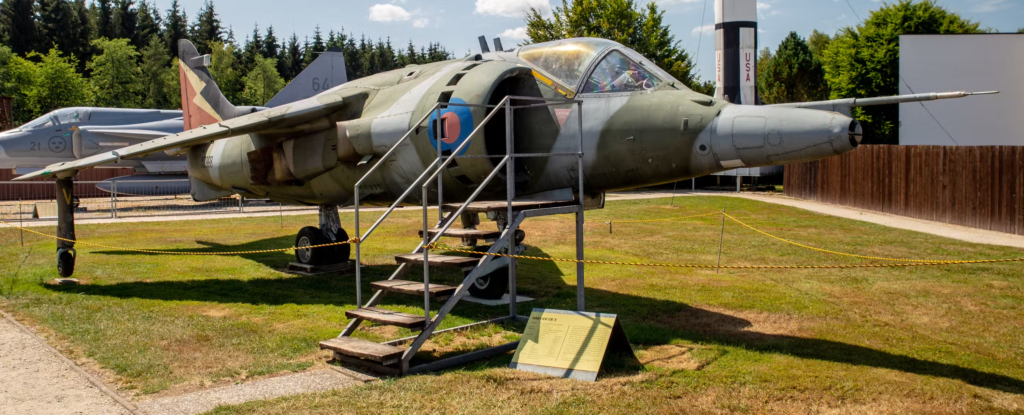
During this time, the company developed the Hawker Harrier, the first Vertical Take Off and Landing (VTOL) aircraft. It was a jet-powered attack and reconnaissance aircraft developed from the Hawker Siddeley Kestrel.
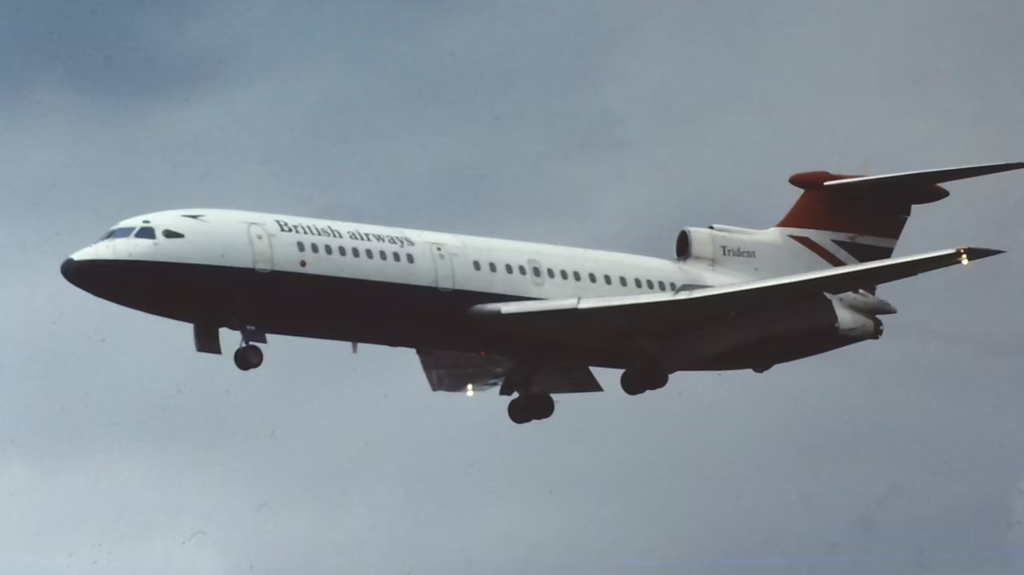
It continued production right through to the 1990s and is still in service today. Other notable aircraft of this time were the HS-121 Trident originally developed by de Havilland, the British Aerospace 146 (BAe 146) and the Hawker Hunter, produced by subsidiaries and renamed later.
Aircraft models and projects
(Data from Graces Guide to British Industrial history)
| Hawker Siddeley Aircraft | |||
| Model | Date | No. Made | Detail |
| Hawker Siddeley Trident | 1962 | 117 | A Jet Airliner originally the de Havilland D.H.121 and the Airco DH 121. |
| Hawker Siddeley HS.125 | 1962 | 1,600+ | Originated as the de Havilland DH.125. Military service as Dominie. |
| P.139B | AEW and COD aircraft project. | ||
| HS.141 | V/STOL airliner project submission. | ||
| HS.146 | 1981 | 387 | Entered production and later renamed the BAe 146. |
| HS 748 | 1960 | 380 | Originated as the Avro 748 turboprop airliner. |
| Hawker Siddeley: Andover | 1965 | 37 | Military derivative of HS 748. |
| P.1121 | A Hawker project. | ||
| P.1127 / Kestrel | 1960-4 | The Hawker P.1127 and the Hawker Siddeley Kestrel FGA.1. | |
| Hawker Siddeley: Harrier | 1969 | 278 | Developed into British Aerospace: Sea Harrier. |
| P.1154 | Canceled | Developed alongside the subsonic and smaller Hawker Siddeley P.1127/Kestrel, the P.1154 was derived from the P.1150. | |
| Nimrod | 1967 | 51 | An extensive modification of the de Havilland Comet, the world’s first operational jet airliner. |
| Hawk | 1976 | 1,000+ | A jet-powered advanced trainer aircraft first flown at Dunsfold, Surrey, in 1974 as the Hawker Siddeley Hawk, and subsequently produced by its successor companies, British Aerospace and BAE Systems, respectively. |
| Hunter | 1954-2014 | 1,972+ | A Transonic British jet aircraft developed in the late 1940s and early 1950s. |
* The Hawker Siddeley name was not used until 1963. Prior to that the aircraft were known by their subsidiary name.
Postwar diversification and development
During the late 1950s, Hawker Siddeley dabbled in the nuclear power industry as well as the locomotive industry. Come 1977, the Aircraft and Shipbuilding Industries Act came into place and Hawker Siddeley Aviation and Dynamics were nationalized. The company was merged with the British Aircraft Corporation (BAC) and Scottish Aviation and then formed British Aerospace.
Both HSA and HSA only accounted for 25% of the Hawker Siddeley business and non-aviation or foreign interests were kept by a holding company named Hawker Siddeley Group PLC. After becoming involved in railways, the Hawker Siddeley Group PLC was sold to BTR PLC in 1992.
The following year, in 1993, British Aerospace sold its corporate jet to the Raytheon Company, which in 2006 became Hawker Beechcraft. In 2012, the company became bankrupt and finally, in 2014, was taken over by Textron Aviation, who also own Cessna.
Source:https://simpleflying.com/hawker-siddeley-history-guide/