
Encouraging Signs as International Travel Begins to Increase
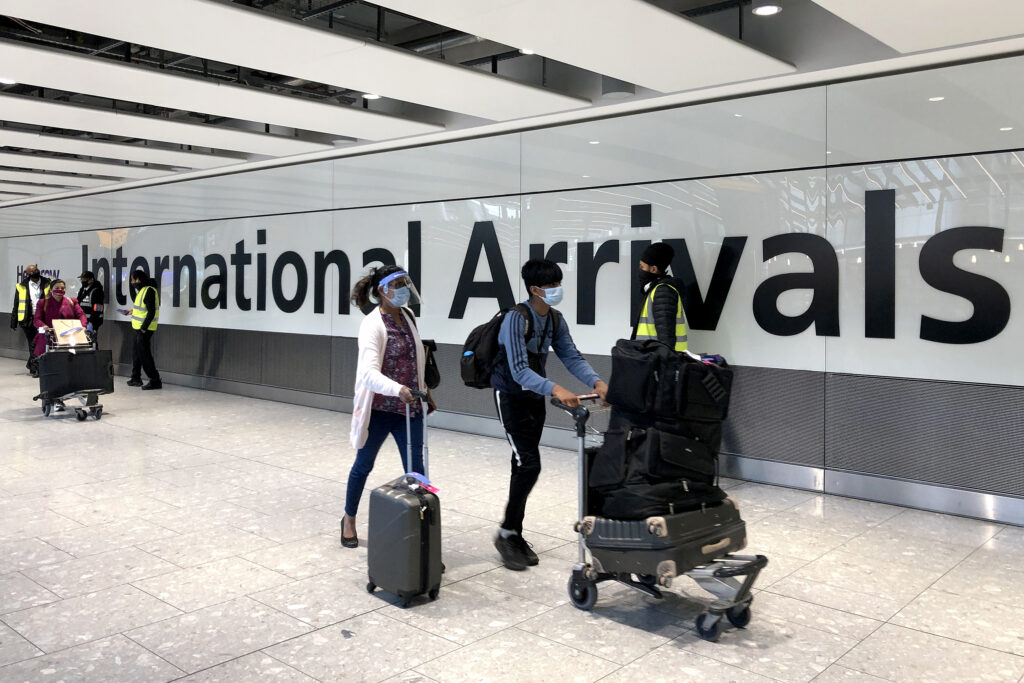
The last 20 months have been the toughest the aviation industry has faced in its entire history, with traffic levels dropping to as low as five per cent of usual volumes at the height of the pandemic.
It has been heart-breaking to see our once thriving terminals at a fraction of their capacity, and in some cases mothballed completely.
It was also heart-breaking to see travel return to something much closer to “normal” across the continent earlier this year, while we have felt stuck in first gear, despite the success of our vaccination programme and low infection rates in the most popular destinations for our customers.
Prolonged restrictions on travel undoubtedly held back our recovery, as customers found themselves grappling with confusing guidance or requirements, and the associated cost of testing.
However, after changes to the Government’s travel restrictions were confirmed we have started to see our airports start to return to how we knew them before the pandemic.
One important milestone was the US re-opening its doors to British travellers for the first time in almost two years.
Pre-pandemic we had more than a dozen routes to the US, many of which were vital lifelines for businesses across the North who trade with America.
It was, therefore, incredibly pleasing to see the first flights to New York and Orlando take off, and reassuring to know Houston, Atlanta and others will follow in the coming months.
It’s not just existing airlines returning to our American routes, it’s a real vote of confidence in the North that Aer Lingus has chosen Manchester as its first UK transatlantic base.
Flights to Barbados started in October with USA routes to come in December. Offering both economy and business class products, the airline is a great option for those heading east on business or pleasure.
We are now once again offering flights to North America, sub-Saharan Africa, and the Far East directly from Manchester, firmly cementing our pre-pandemic position of the North’s global gateway.
t’s great to see the return of longstanding carriers like Singapore Airlines, Cathay Pacific, Emirates and Etihad, plus the resumption of newer carriers like Ethiopian Airlines.
While we are currently operating at around 50% of pre-COVID levels, as restrictions continue to ease, we should hopefully see these numbers increase as we edge in 2022.
In the New Year we’ll be calling on the Government to further simplify the travel system, so that international travel can start to feel as it was before the pandemic.
We think it will be at least until 2024 that we see a complete return to pre-COVID passenger numbers, but we are hoping to restart many more routes in the weeks and months ahead, ensuring we continue to connect the North to key global destinations. Read more
Ethiopian Airlines, Boeing Sign MoU For B787 Landing Gear Exchange
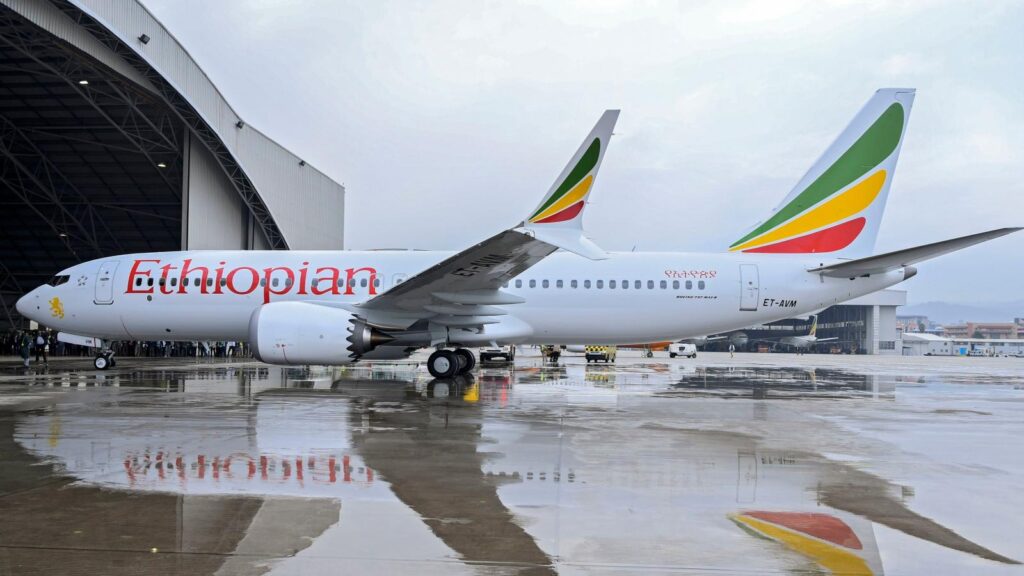
LAGOS – Ethiopian Airlines has signed a Memorandum of Understanding (MoU) with Boeing, which would help the airline to bring cost savings to its maintenance operations with Boeing’s 787 landing gear exchange programme.
A statement by the airline stated that the agreement was signed at the Dubai Air Show.
Tewolde GebreMariam, Group Chief Executive Officer, Ethiopian Airlines, while commenting on the MoU, said that as the fastest growing airline in Africa, much of its success depends on its ability to seek out new ways to drive operational efficiency in the airline’s processes.
“As the commercial airline market continues to recover, we believe these services offered by Boeing provide a reliable way to realise more stability and predictability in managing our overall maintenance operations and costs across our fleet
“With the landing gear exchange programme, Boeing would guarantee the availability of 29 landing gear shipsets wherever and whenever they are needed to support the Ethiopian 787 fleet, enabling more efficient and cost-effective maintenance operations,” he added.
The Boeing 787 landing gear exchange programme greatly simplifies the contracting, scheduling and management of the landing gear overhaul process. Through this programme, air carriers can quickly exchange landing gears that need to be repaired or overhauled with a replacement set of certified landing gear from a dedicated resource pool maintained by Boeing.
Ticket Pricing: Airlines’ Exchange Rate Aligns with FMDQ, says IATA

The International Air Transport Association has clarified that it does not unilaterally determine the dollar-naira exchange rate used for ticket pricing by international airlines flying into Nigeria.
IATA, the global trade body representing over 290 international airlines-made the clarification against the backdrop of the recent fall in the value of the naira against the United States dollar on the international airlines’ ticketing platform.
According to the global airline body, the rate of exchange it publishes daily for the purpose of ticket pricing by international airlines flying in Nigeria is in line with the daily trading rates on the FMDQ Group Website.
As such, the group said it was not responsible for the fluctuation or stagnation of the exchange rates.
The clarification by an IATA spokesperson in Geneva read, “IATA does not unilaterally determine the exchange rate for the sale of passenger tickets in Nigeria. IATA published a daily rate of exchange (ROE) for ticket sales in Nigeria which is aligned with daily trading rates on the FMDQ Group Website. IATA does not determine the rate of exchange nor is it responsible for the fluctuation or stagnation of the rates. IATA rate of exchange for ticket sale reflects the FX trading fluctuation on the FMDQ website:2021-10-27 00:00:00=444; 2021-10-26 00:00:0=415.2; 2021-10-25 00:00:00=429; 2021-10-24 00:00:00=424.45.”
The global trade also said, “Furthermore, the fluctuation of the rate of exchange for ticket sale is not due to airline blocked funds in Nigeria. IATA and the airlines do not intend to mitigate airlines’ reduced access to foreign exchange through exchange rate fixing which is beyond their control. The resolution of the airline access to foreign exchange crisis rests with the Central Bank of Nigeria and the commercial banks.”
The shortage of dollars has forced the naira south against the United States dollar on the parallel market and other exchange rate platforms.
The developments have affected most products priced in foreign currencies including airline tickets.
Also, the inability of the CBN to sell an adequate amount of forex to foreign airlines operating in Nigeria to enable them to repatriate their ticket sales proceeds has been affecting the airlines’ operations.
Currently, foreign airlines flying into Nigeria have over $200m in unremitted ticket sales proceeds, a development that forced IATA to recently advise the Federal Government of Nigeria to address the issue urgently warning that it might hamper aviation in the country.
As things stand, the issue is still pending but there are indications that IATA is trying to meet the Nigerian government to resolve the issue amicably.
Nigeria, Eight Others Top African Countries with High Airport Charges – Report
Nigeria and eight others have been ranked as African countries with high airport taxes, a new report has revealed.
Niger, Liberia, Guinea Bissau, Senegal, Bangui, Sierra Leone, Republic of Congo, and Nigeria topped the list of African countries with high airport taxes, the Airport Charges Report showed.
It indicated that airport taxes in the nine countries were as high as those in some European countries which had faced stiff resistance from the International Air Transport Association.
Niamey, Niger Republic which topped the list, charges passengers $162 on regional departure to African countries. This was followed by Monrovia, Liberia with $145; Guinea Bissau, $137; Dakar, Senegal $116; Douala, Cameroon $115; Bangui $111; Freetown, Sierra Leone $109; and Nigeria, $100.
International travelers at Bamako, Mali; Antananarivo, Madagascar; Cotonou, Benin Republic; Kinshasa, Zaire pay $99; $91, $88, $77 respectively.
In Accra, Ghana it costs $77; N’djamena $68; Djibouti $67; Cairo 67; Lome, Togo $62; and Entebbe, Uganda is $57. Charges by other African nations oscillate between $50 and $3.
Maseru, Lesotho had the lowest airport tax at $3, followed by Tripoli, Libya $4; Lubombo, Eswatini $7; Khartoum, Sudan $8; Gaborone, Botswana $11; and Tunis, Tunisia $11.
In Central and West Africa, 10 out of 23 airports (almost half) charge more than $100. As such, the two regions represented only 20 per cent of the global traffic into and out of Africa. Most of the northern African airports, which represent 35 per cent of the traffic, charge less than $50.
The Central and West African airports had the highest passenger taxes and fees, which varied from $164.9 in Niamey to $171 in Ilha Do Sal.
The five most expensive airports in West Africa charge over $100. Passengers in North African airports enjoy the lower amounts. Cairo charges $67 as passenger taxes and fees, while Khartoum charges only $8.2.
Delta Airlines Records Surge in Bookings As US Opens Up
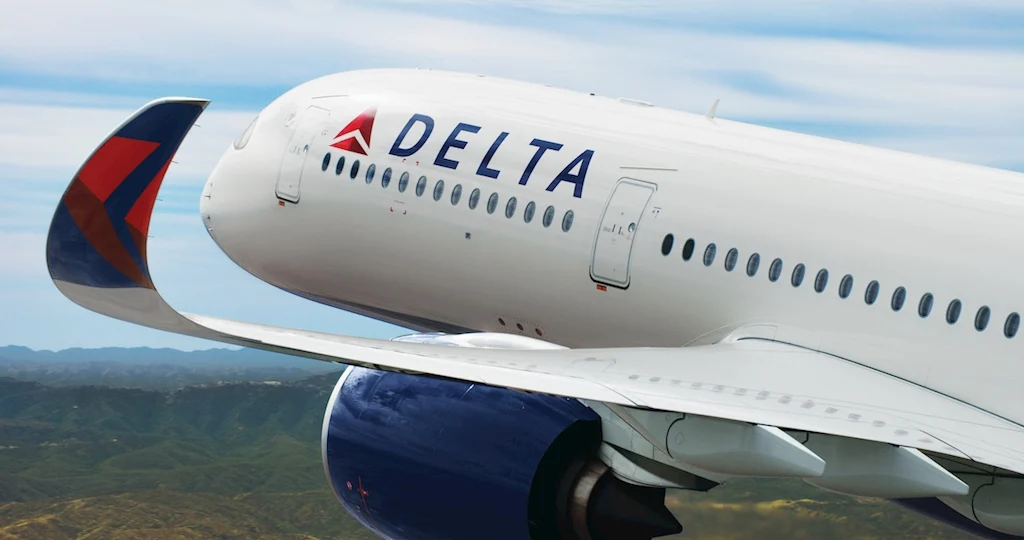
Delta Air Lines says it will be increasing flights from key European cities into the United States following the reopening of American borders to fully vaccinated passengers.
A statement by the airline revealed that its international point of sale bookings saw a 450 percent increase in the six weeks after the US government’s announcement compared to six weeks prior to the announcement.
The statement quoted the Chief Executive Officer, Delta Air Lines, Ed Bastian, as saying, “This is the start of a new era for travel and for many people around the world who have not been able to see loved ones for almost two years.
“While we have seen many countries reopen their borders to American visitors over the summer, our international customers have not been able to fly with us or visit the US. All of that changes now.
We are grateful to the US government for lifting travel restrictions and are looking forward to reuniting families, friends, and colleagues over the coming days and weeks.”
The company said it would be increasing flights this winter from key European cities including London-Boston, Detroit and New York-John F. Kennedy, Amsterdam-Boston, Dublin-New York-JFK, Frankfurt-New York-JFK, and Munich-Atlanta.
The airline reported this summer that its US domestic leisure business had already rebounded to 2019 levels, but ongoing border restrictions have prevented a meaningful recovery across the globe. International inbound travel to the U.S. contributed $234bn in export income to the U.S. economy, generated a trade surplus of $51bn, and directly supported 1.2 million American jobs in 2019.
Senate Wades Into Nigeria, UAE Diplomatic Row

The Senate on Tuesday waded into the diplomatic row between Nigeria and the United Arab Emirates (UAE) following disagreements between both countries.
This followed a point of order by the Minority Leader, Senator Enyinnaya Abaribe, during the plenary.
Abaribe, while relying on Orders 42 and 52 of the Senate Rules, noted that in February 2021, the federal government stopped the UAE national carrier, Emirates Airline from subjecting Nigerian travellers to additional rapid antigen tests as against its stipulated negative PCR test at the Lagos and Abuja airports before departure.
He said Emirates Airline then shut down flights to and from Nigeria owing to the disagreement between the airline and the aviation authorities on the propriety of subjecting passengers travelling from Nigeria to emergency COVID-19 protocols.
The Senate mandated its Committees on Foreign Affairs and the Presidential Task Force on COVID-19 to interface with the Ministry of Foreign Affairs, and the National Intelligence Agency on the best ways of resolving this crisis and report back to the Senate within two weeks.
Sources: Daily Trust, Punch Online, Independent, Business Desk