
African Airport and Service Charges Reach ‘Outrageous’ Levels
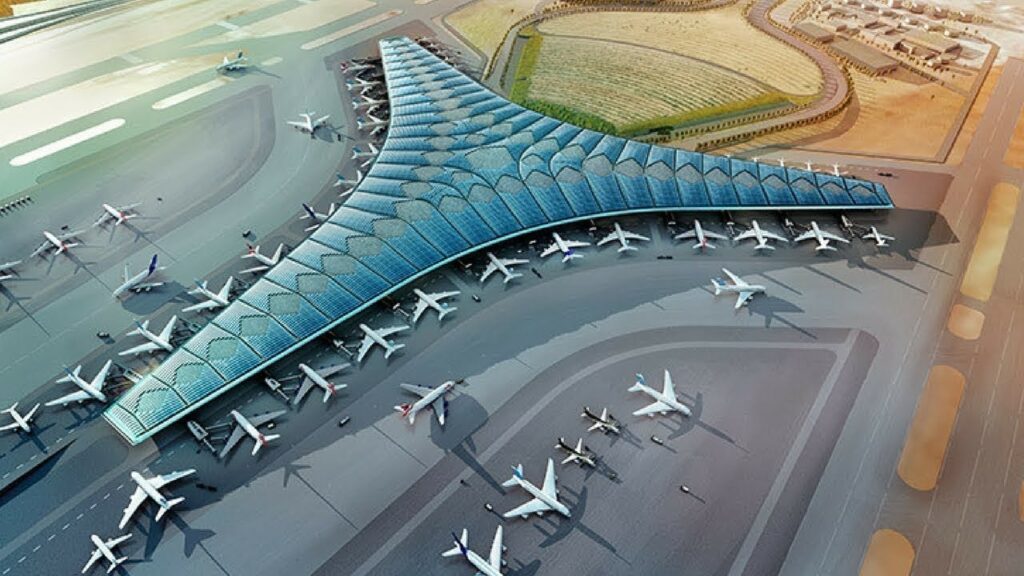
The International Air Transport Association (IATA) has singled out Airports Company of South Africa and Ethiopia’s Air Navigation Service Providers (ANSP) among examples of infrastructure service providers looking to hike their fees to recoup lost revenues. Air traffic management (ATM) provided by air navigation service providers (ANSPs) is the invisible part of the air transport value chain but it is the essential enabler for the air transport system.
IATA’s Director-General Willie Walsh warned that planned increases in charges by airports and ANSPs would stall recovery in air travel and damage international connectivity. Looking at Africa, Airports Company of South Africa (ACSA) is asking to increase charges by 38 percent in 2022 while Ethiopian ANSP is raising charges by 35 percent in 2021.
In Nigeria, the Airspace Management Agency (NAMA) is the sole Air Navigation Service Provider (ANSP) but it is not known how much the agency charges for its services.
Peer review
The Managing Director of NAMA, Capt. Fola Akinkuotu, had recently said only an effective peer review of safety systems and procedures among ANSPs in the region could enable Africa to build upon its rising safety profile and make the continent more competitive in the global aviation industry.
He said the time had come for African ANSPs to harmonize and synergize their safety systems and procedures by bringing members up to speed with industry best practices with the ultimate goal of achieving a single African sky.
Amsterdam Schiphol Airport Is requesting to increase charges by over 40 percent over the next three years; Heathrow Airport is pushing increase charges by over 90 percent in 2022, and NavCanada is increasing charges by 30 percent over five years.
ANSP charges skyrockets
The ANSP charges have already reached $2.3 billion. Walsh warned that further increases could be ten-fold this number if proposals already tabled by airports and ANSPs are granted.
“A $2.3 billion charge increase during this crisis is outrageous. We all want to put COVID-19 behind us. But placing the financial burden of a crisis of apocalyptic proportions on the backs of your customers, just because you can, is a commercial strategy that only a monopoly could dream up. At an absolute minimum, cost reduction—not charges increases—must be top of the agenda for every airport and ANSP. It is for their customer airlines,” said Walsh.
A case in point is found among European air navigation service providers. Collectively, ANSPs of the 29 Eurocontrol states, the majority of which are state-owned, are looking to recoup almost $9.3 billion (€8 billion) from airlines to cover revenues not realized in 2020/2021. They want to do this to recover the revenue and profits they missed when airlines were unable to fly during the pandemic. Moreover, they want to do this in addition to a 40 percent increase planned for 2022 alone Read more
IATA AGM 2021 News in Brief
Association calls for reopening borders with testing; Commits to net-zero by 2050; Calls increases airport charges ‘outrageous’; Delivers diversity awards; Next AGM in Shanghai
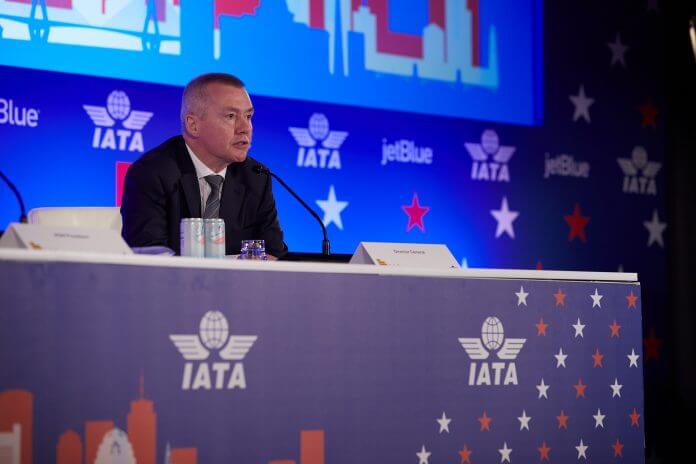
The International Air Transport Association (IATA) has made a raft of agreements and issued calls for change to the airline industry including calling on governments to reopen borders closed because of COVID-19. The industry also committed itself to carbon-neutrality by 2050, decried planned increases in air navigation charges and airport charges as well as delivering awards for “diversity”.
IATA issued a call for an end to what it said were “wildly inconsistent COVID-19 travel restrictions that are stalling the recovery of air transport” and urged governments to implement simplified regimes to manage the risks of COVID-19 as borders re-open to international travel. “Travel restrictions bought governments time to respond in the early days of the pandemic,” said IATA Director General Willie Walsh. “Nearly two years later, that rationale no longer exists. COVID-19 is present in all parts of the world. Travel restrictions are a complex and confusing web of rules with very little consistency among them. And there is little evidence to support ongoing border restrictions and the economic havoc they create.”
Testing results for UK arriving passengers demonstrate that travelers are not adding risk to the local population. “Of the three million arrivals between February and August only 42,000 tested positive, or fewer than 250 a day. Meanwhile, the daily case count in the UK is 35,000 and the economy, apart from international travel, is wide open. People should be just as free to travel,” said Walsh.
n the last months, several key markets that had previously been closed have taken steps to open to vaccinated travelers. Among markets that were previously closed, Europe was an early mover, followed by Canada, the UK, the US, and Singapore. Even Australia, which has some of the most draconian restrictions, is taking steps to re-open its borders to vaccinated travelers by November. IATA said it supports these moves and encourages all governments to consider the following framework for re-opening borders:
- Vaccines should be made available to all as quickly as possible;
- Vaccinated travellers should not face any barriers to travel;
- Testing should enable those without access to vaccines to travel without quarantine;
- Antigen tests are the key to cost-effective and convenient testing regimes;
- Governments should pay for testing, so it does not become an economic barrier to travel. Read more
Etihad launches flights to Johannesburg, Cape Town and Zanzibar

Etihad Airways today announced three new quarantine-free destinations for the coming winter season. This November, the airline will begin flying to Johannesburg and Cape Town in South Africa, and the beautiful Indian Ocean island of Zanzibar. The new additions to Etihad’s network mean the UAE’s national carrier will be operating to 70 destinations across 47 countries.
Etihad Airways has launched a sale on fares to Johannesburg, Cape Town, and Zanzibar, valid until midnight on 6 October 2021. Available on a first-come, first-served basis, guests can enjoy return fares starting from AED 995 in Economy and AED 3995 in Business class.
Tony Douglas, Group Chief Executive Officer, Etihad, said: “We’re proud to be launching Etihad’s newest destinations in Africa this winter and we’re confident our guests will find they are all incredible places to visit.
“Johannesburg is an important route on our network and offers vital connectivity to and from the southern African region. On the southern coast, Cape Town is a breathtaking part of the world, with something to offer the most discerning traveler. Likewise, the beautiful island of Zanzibar will complement our network to the Maldives and Seychelles offering more choice for leisure travelers looking to enjoy the glorious Indian ocean.
“We are also thrilled to offer connectivity for travelers from both countries to visit our home the UAE over the winter months. With the world’s greatest show, Expo 2020, opening now there has never been a better time to visit Abu Dhabi and the UAE.”
Etihad will start flights to Johannesburg, South Africa’s biggest city, from 25 November. At the same time, Etihad will launch its operation in the stunning coastal city of Cape Town. Both destinations will operate three times per week on Mondays, Thursdays, and Saturdays. The route will be serviced by Etihad’s flagship and most sustainable aircraft, the Boeing 787-9 Dreamliner, with 28 Business Studios, 78 Economy Space seats, and 184 Economy seats.
The new service to Zanzibar will operate from 26 November giving residents in the UAE the ideal winter holiday. The route will also offer easy connectivity for guests traveling from Europe and North America and transiting through Abu Dhabi. The scheduled flights will operate on Tuesdays, Fridays, and Sundays on the airline’s Airbus A320 aircraft offering 8 seats in Business and 150 seats in Economy. Read more
IATA: Industry Set to Lose US$201 Billion for 2020-2022 Due to COVID-19 Pandemic, Quarantines
The International Air Transport Association (IATA) announced its latest outlook for airline industry financial performance showing the industry is likely to suffer at least US$201 billion in cumulative losses for 2020-2022 due to the COVID-19 pandemic and near shut-down in international aviation.
At the group’s annual general meeting in Boston, IATA said net industry losses are expected to fall to US$11.6 billion in 2022 after a US$51.8 billion loss in 2021, which is worse than the US$47.7 billion loss estimated in April. The association said net 2020 loss estimates have been revised to $137.7 billion from US$126.4 billion. Taken together, total industry losses in 2020-2022 are expected to reach US$201 billion.
IATA said demand (measured in RPKs) is expected to stand at 40 percent of 2019 levels for 2021, rising to 61 percent in 2022. Total passenger numbers are expected to reach 2.3 billion in 2021. This will grow to 3.4 billion in 2022 which is similar to 2014 levels and significantly below the 4.5 billion travelers of 2019. Robust demand for air cargo is expected to continue with 2021 demand at 7.9 percent above 2019 levels, growing to 13.2 percent above 2019 levels for 2022.
“The magnitude of the COVID-19 crisis for airlines is enormous,” said Willie Walsh, IATA’s director-general. “Over the 2020-2022 period total losses could top US$200 billion. To survive airlines have dramatically cut costs and adapted their business to whatever opportunities were available. That will see the US$137.7 billion loss of 2020 reduce to US$52 billion this year. And that will further reduce to US$12 billion in 2022. We are well past the deepest point of the crisis. While serious issues remain, the path to recovery is coming into view. Aviation is demonstrating its resilience yet again.”
The air cargo business is performing well, and domestic travel will be near pre-crisis levels in 2022. The challenge is international markets which remain severely depressed as government-imposed restrictions continue, IATA said. Read more
International Air Travel in 2021 Will be Just 22 percent of 2019 Levels; Remains in Deep Crisis: IATA
International air travel continues to remain in deep crisis and will be just 22 percent in 2021 as compared to the 2019 levels, said Conrad Clifford, Deputy Director-General of global airlines body IATA on Monday.
“The lack of harmonized border measures, restrictions, and procedures is a major cause of the failure to restart (international) travel,” he said during a media briefing here at the 77th annual general meeting of the International Air Transport Association (IATA).
According to aviation industry sources, just around 20 percent of pre-Covid international flights are being operated from India right now.
Scheduled international passenger flights have been suspended in India since March 23, 2020, due to the coronavirus pandemic. However, special flights have been permitted under “air bubble” arrangements that India has formed with approximately 28 countries.
Under an air bubble arrangement, airlines of one country are permitted to operate limited International passenger flights to the other’s territory with specific restrictions.
When IATA analyzed the entry restrictions of the top 50 air travel markets of the world, it was observed that seven countries have no restrictions, five have no entry restrictions but you might still have to quarantine, Clifford mentioned here.
“Meanwhile, 38 have restrictions of the bewildering variety,” he stated. For example, out of the 38 countries where restrictions are still in place, 24 differentiate based on some sort of country risk categorization, but there is little consistency in the risk categorization, Clifford said. “The same country may appear on one state’s green list, another state’s amber list, and another state’s red list,” he added.
On Sunday, Lufthansa group’s CEO Carsten Spohr had said here that restricting air traffic between India and Germany is hurting both the economies and the airline group is eagerly waiting for the Indian government to allow more flights between the two countries. Indian aviation regulator DGCA currently allows Lufthansa to operate just 10 weekly flights from India to Germany, after it had accused the airline in September 2020 of being a beneficiary of “inequitable distribution” of traffic. Read more
‘African Airlines will Blossom with Single Transport Market’

The full implementation of the Single African Air Transport Market (SAATM) will see African airlines dominate the African skies, as opposed to the current tradition that makes foreign carriers dominate.
The acting Chief Commercial Officer, Ethiopian Airlines, Mr. Esayas WoldeMariam, who expressed this view during a facility tour of Ethiopia Airlines at its corporate headquarters in Addis Ababa, said African airlines and governments should be committed to making SAATM a reality.
He said Ethiopian Airlines, a pioneer of SAATM, is committed to the cause because of the huge benefits it has on the continent.
He said African airlines constitute only three percent of the total aviation market and that 80 percent of the three percent is operated by non-African airlines, leaving only 20 percent.
“But with SAATM, African airlines will have a huge chunk of the aviation market,” he said.
“We are not just working towards SAATM only, we created it. When Nkosazana Dlamini-Zuma was the head of the African Union Commission, Ethiopian Airlines spearheaded the push to have SAATAM,” he added.
WoldeMariam said before the defunct Yamoussoukro Decision, Africa needed something modern that could work. “Zuma then told us to go and bring along some other airlines, so we brought a few airlines together and we went in.
“She was convinced of the initiative. Afterward, the African governments discussed and ratified it.
“She said African airlines would work with each other and not against each other and will try to connect cultures, people, and goods in Africa.
“That is why Ethiopia started making visas online and visas on arrival for all Africans. This is because many African countries delay or deny visas for fellow African citizens while they give to people who are coming from the northern hemisphere. Read more
Gulfstream Reveals New G800 Test Aircraft; Announces G400.

Gulfstream has unveiled two new business jets, the long-range G800, and the smaller G400.
Gulfstream president Mark Burns introduced the two new aircraft during an event live-streamed on YouTube from the company’s headquarters in Savannah, Georgia.
In front of a live audience, the company rolled out the first test aircraft of the new G800. The type can seat up to 19 passengers in three or four living areas and is powered by two Rolls-Royce Pearl 700 engines.
The maximum range for the G800 is 8,000nm (14,800km) at Mach 0.85 or 7,000nm at Mach 0.90.
“As you can see from the airplane before you, the G800 has already achieved a very high level of maturity and benefits greatly from our investment in manufacturing and design of the G700,” says Burns.
“Manufacturing of the test fleet is well underway. The team has already begun instrumentation and calibration of this first test airplane clearing the way to begin flying.”
Gulfstream says that customer deliveries for the G800 will start sometime in 2023. This should go some way to countering the Dassault 10X, which will enter service at the end of 2023 with a 7,500nm maximum range.
Burns also launched the G400, appearing in front of a 3D digital rendering of the new type. Gulfstream anticipates deliveries to commence in 2025.
Powered by two Pratt & Whitney PW812GA engines, the G400 will have a maximum range of 4,200nm at its maximum speed of Mach 0.85.
Three floorplans will be offered with options to seat nine, 11, or 12 passengers. In the Gulfstream portfolio, the G400 will sit above the G280, which is produced in partnership with Israel Aerospace Industries, and below the G500.
Both aircraft feature the company’s Symmetry flight deck, which includes linked active control sidesticks – which Gulfstream claims is an industry first. In addition, both flight decks feature 10 touch-screen displays.
The G800 also includes Gulfstream’s new Combined Vision System, which improves situational awareness and improves airport access globally.
Nigerian Airlines, Others to Lose N1.4tn, Poor COVID-19 Vaccination Slows Recovery
Nigerian and other African airlines will see a very slow pace of recovery in financial performance from a $1.9bn loss in 2021 to a $1.5bn loss in 2022, bringing the continent’s total loss in two years to $3.4bn (N1.4tn), the International Air Transport Association has said.
According to the Geneva-based airline body, low vaccination rates in Nigeria and other countries in the continent are expected to severely dampen demand throughout 2022.
The Director-General, IATA, Willie Walsh, made the disclosure on Monday during his presentation of the airline industry report at the 77thn Annual General Meeting and World Air Transport Summit holding in Boston, Unites States.
In the ‘Report on the Air Transport Industry, the IATA DG said the projected slight improvement in Africa’s airline industry profit between this year and next year was built on the expectation of some recovery in intra-Africa travel and travel to some tourist destinations with relatively higher vaccination rates.
Walsh said, “African carriers will see a very slow pace of recovery in financial performance from a $1.9bn loss in 2021 to a $1.5bn loss in 2022.
“Low vaccination rates across the continent are expected to severely dampen demand throughout 2022.
“The slight improvement is built on the expectation of some recovery in intra-Africa travel and travel to some tourist destinations with relatively higher vaccination rates.”
According to health industry data, the vaccination rate in Africa is less than 10 percent while that of Nigeria is still far less than five percent.
The IATA report noted that vaccinations were proving to be a key driver for government relaxation of border control measures.
The airline body said quick progress in vaccine distribution in developed economies was progressively giving governments the confidence to re-open borders and people the confidence to travel.
The report, however, noted that parts of the world with slower vaccine distribution (developing economies and some developed economies in the Asia Pacific) would take longer to see an industry recovery.
Walsh said, “The magnitude of the COVID-19 crisis for airlines is enormous. Over the 2020-2022 period, total losses could top $200bn. Read more
Uganda Airlines Makes Maiden Trip to Dubai
Uganda’s national carrier on Monday made its maiden trip to Dubai, the first intercontinental flight for the carrier since it was revamped two years ago.
Uganda Airlines officials said that the destination is popular with Ugandan travelers who go there for both business and leisure.
Officials say Dubai is a lucrative route.
Before the Covid-19 pandemic, Dubai was one of the most preferred destinations for most Ugandan travelers, according to Uganda Civil Aviation Authority (UCAA).
It remains a popular route out of Uganda.
“The UAE, and most especially Dubai, is important for both the formal and informal trade for Uganda. So we hope to tap into that demand for traders traveling to the middle and Far East,” an official at the airline said.
The official added that considering Dubai’s strategic location, Uganda Airlines hopes to tap into the connectivity that the destination offers into Europe, the far West, and the Far East through signing interline agreements with bigger players operating in Dubai.
“Our interline agreement with Emirates opens up opportunities for the traveler on Uganda Airlines to fly to any Emirates destination while also generating opportunities in East, Central, and Southern Africa,” the official noted.
Last month, the UAE took Uganda off its Red List, allowing the airline to proceed with plans to fly to Dubai.
According to the Uganda Civil Aviation Authority, 5,800 passengers were flying from Entebbe to Dubai every month by 2017. The number is believed to have increased, according to spokesman Mr. Vianney Lugya.
Uganda Airlines is currently plying regional routes using four bombardier CRJ900 crafts.
For months, it has been planning to embark on long-haul routes after it acquired two bigger Airbus A330neo crafts. Read more
World Airline Body Wants Fewer Travel Restrictions, More Government Handouts

World airline trade association IATA is holding its general meeting in Boston. When European airline heads need a sinecure to fall into after being deposed, they become Director-General of the International Air Transport Association.
Alexandre de Juniac was the CEO of Air France–KLM before becoming Director-General. Last year he was replaced by Willie Walsh, the former CEO of British Airways and parent company IAG who left amidst a reported dalliance with a subordinate (which he has denied).
Never one to mince words, he laid out what the world airline industry wants,
- Fewer restrictions that limit air travel
- Taxpayer subsidies
He is absolutely correct to argue that Covid-19 is everywhere and that except for the small handful of nations that truly have zero Covid there’s little effect from travel as such. I’d caveat that precautions need to be taken in places that risk overwhelming their health care capacity, but travel bans aren’t among the more effective interventions to take.
Walsh though takes the matter further and wants the world to recognize any vaccine approved by the World Health Organization (Sinovac Coronavac!). He wants no restrictions for those vaccinated, antigen tests for the unvaccinated, and taxpayers rather than travelers to pay for testing.
The theme that government should pick up the tab for everything continues in his argument that airports shouldn’t seek to charge airlines more to make up for their pandemic losses. Instead of user pays he prefers picking taxpayer pockets. Where airports are owned by governments, such as in the U.S., he believes:
It is owned by the government. In the same way airlines go to their shareholders to raise additional equity or the debt market to raise debt, airports should be required to do the same.
Airports in the U.S. of course got multiple rounds of bailouts in some cases many times their annual budgets. Indeed, Dallas – Fort Worth has a better balance sheet than American Airlines.
Walsh notes that airlines around the world received $243 billion in government support during the pandemic ($79 billion was direct to U.S. airlines, but this doesn’t include airports or contractors). However, he complains that a third was for ‘payroll support’ (in the U.S. that was mostly in reality for shareholders and creditors) and that $110 billion is loans. The audacity in not making it all outright handouts!
The world airline lobby shop IATA wants fewer restrictions on travel, and more government money. Where they’re right on the merits it’s because it’s in their own interest, and when they’re wrong on the merits it’s because they’re pursuing their own interests. And no one does this as unabashedly at current IATA head Willie Walsh. Read more