
Out of Africa – COVID Pandemic Has Strengthened Rather than Weakened the Barriers to Change
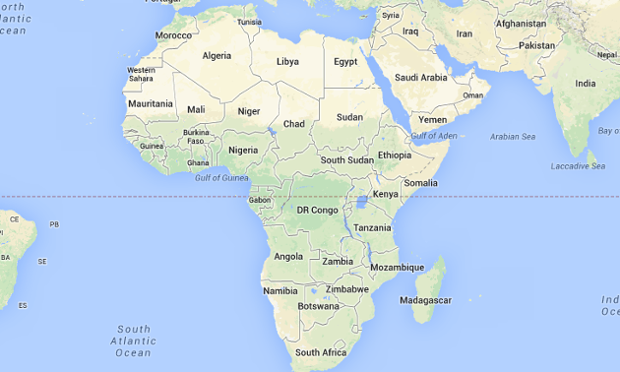
Africa, the continent often described as being the last frontier for air travel development, but one that has seen bitterly slow progress with government intervention, visa restrictions, high taxation and poor infrastructure among the many problems that have inhibited growth.
The huge scale of the Continent, together with its poor ground infrastructure means that air travel is the best option for even short regional hops in Africa, let alone connecting major cities across the Continent. But even before today’s Covid influenced world, even flying from one side of Africa to the other could entail a lengthy connection, often via Europe or the Middle East. In fact, even flying between neighboring countries could entail a connection via a third that is further away.
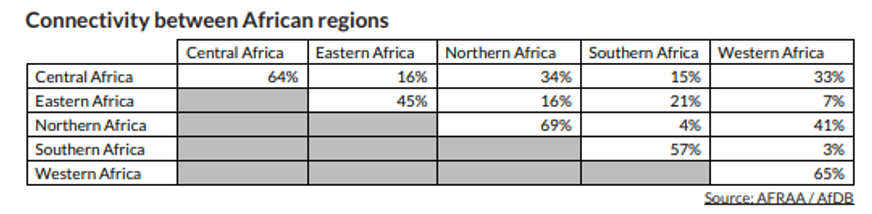
Research from African Airlines Association (AFRAA), Africa’s airline trade association, perfectly highlights the poor intra-African connectivity. While intra-connectivity is relatively high within Northern Africa, connectivity across regions remains poor. The highest rate is between northern and western Africa. Southern Africa is the less connected with other regions, particularly with the west of the continent.
The table below highlights the percentage of direct connections existing between all the countries within a region or toward another African region in relation to the total number of possible connections.
We still question what is any different there to what we have been discussing for years, decades even! We know the potential for building a better air transport network across the vast Continent is massive, but is there genuine appetite to deliver this by the stakeholders that will ultimately decide if we can turn years of discussions into firm actions? Has the COVID-19 crisis changed anything?
African Airlines Association (AFRAA) reported African airlines lost USD2.6 billion in 1Q2021 due to the coronavirus pandemic and anticipated a similar level of losses of for 2Q2021.
International Air Transport Association (IATA) has warned of tepid demand” and predicted at the start of the year that the local industry would only hit 38% of 2019 levels in 2021. Fortunately, it appears that may prove to be a conservative estimate.
Ethiopian Airlines Group CEO Tewolde GebreMariam explained during the Feb-2021 edition of CAPA Live that COVID had affected African airline industry “much more and much worse than the rest of the airline industry across the rest of the world”. Read more
Domestic Cargo Movement Drops by 15%
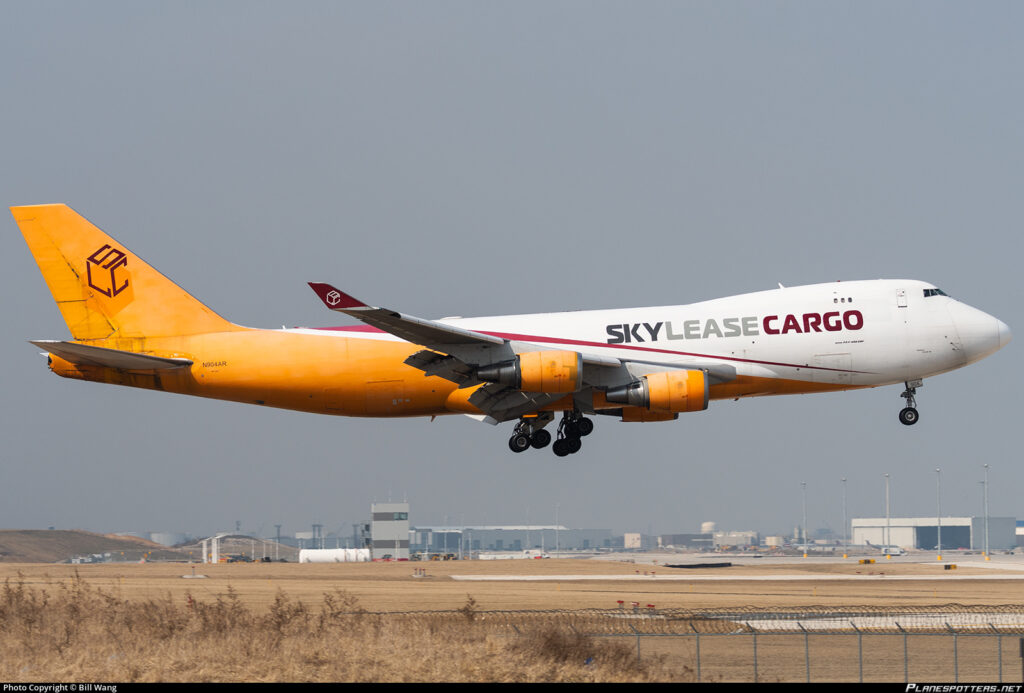
The harmonized cargo movement in the country for the year 2020 indicate a significant drop of 15 per cent in cargo movement, data from the Federal Airports Authority of Nigeria have shown.
Following the restriction of movement of air passengers across the globe, there was an increase in air cargo demand globally for the year 2020.
The data for air cargo movement in Nigeria, however, revealed that 2020 was not as robust as 2019.
North America and Africa performed strongly globally according to the International Air Transport Association April, 2021 report.
The report said, “Global demand, measured in cargo tonne-kilometers, was up nine per cent, compared to January 2019 and +1.5 per cent compared to January 2021.
“All regions except for Latin America saw an improvement in air cargo demand compared to pre-COVID levels and North America and Africa were the strongest performers.”
Data obtained from FAAN showed that total imports and exports in 2019 was 174,880,619.14Kg, while in 2020 it was 147, 470, 437.88Kg.
Total imports arriving at the four major airports in the country stood at 131,376,073.02Kg, while total exports were 16,094,364.86Kg.
Lagos airport consistently had the highest number of imports and exports for 2019 and 2020.
Lagos total exports and imports for 2020 were 124,314,083.26Kg.
Abuja, Port Harcourt and Kano had 7,993,216.40Kg, 3,506,256.00Kg, 11,656,882.22Kg respectively. Read more
Ethiopian, Boeing Sign MOU to Position Ethiopia As Africa’s Aviation Hub
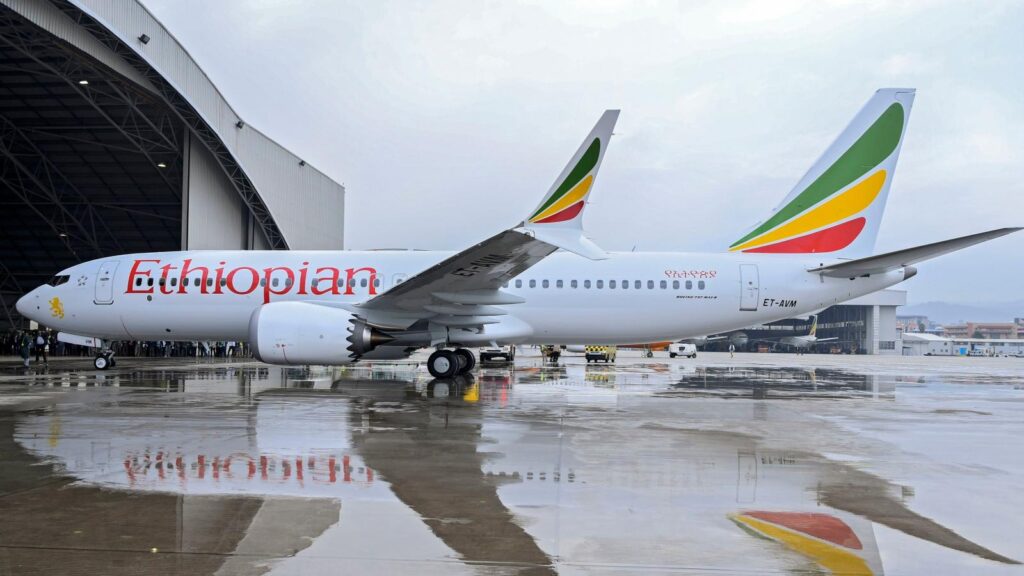
Addis Ababa — Ethiopian Airlines and Boeing have signed a strategic Memorandum of Understanding (MoU) on positioning Ethiopia as an aviation hub for Africa.
Building on the two parties’ seventy years of shared history in aviation, the MoU aims at positioning Ethiopia as Africa’s aviation hub – “Ethiopia for Africa”, according a press release issued by the Ethiopian Airlines.
Boeing has recognized Ethiopian as a global aviation leader in the continent the press release said, adding the MoU is indicative of Boeing and Ethiopian Airlines interest to establish a mutually beneficial world class aviation partnership.
To realize their shared vision, Ethiopian and Boeing have agreed to work in partnership in four areas of strategic collaboration namely: Industrial Development, Advanced Aviation Training, Educational Partnership, and Leadership Development in a span of three years.
o this effect, joint multidisciplinary teams have been established to implement the strategic partnership and important milestones have already been registered.
CEO of Ethiopian Airlines Tewolde GebreMariam said, “I am very much thrilled not only to sign this historic MoU with our long-standing aviation partner, Boeing but also to the implementation of milestones. We have been working in collaboration with Boeing on different large-scale projects in aviation for more than 70 years to serve the continent of Africa and this partnership expands and builds our capability in multiple fields.”
The MoU will successfully attain its goal of positioning Ethiopia as the continent’s aviation hub he said, adding “We highly value the critical role of our American partner companies in accomplishing our goals and we will continue to work with key American aviation players like Boeing, GE, Pratt and Whitney and Collins Aerospace etc… in our journey towards excellence in aviation.”
Ethiopian and Boeing desire Ethiopian Aviation Academy to be recognized as a global standard for aviation training. Read more
Oneworld Outlines Path to Net Zero Emissions by 2050
The oneworld® Alliance has outlined its path to achieving net zero emissions by 2050, reiterating its commitment to sustainability across the alliance’s 14 member airlines.
The initial oneworld carbon roadmap unveiled today illustrates how the alliance will meet its net zero emissions target that was first announced in September 2020, establishing oneworld as the first global airline alliance to commit to a common carbon neutrality goal. oneworld member airlines will reach the target through various initiatives, including fleet modernisation, improvements in operation efficiencies, advancing the use of sustainable aviation fuel (SAF) certified by ICAO-approved schemes, and carbon offsets and removals.
On behalf of member airlines, oneworld is calling on government and industry stakeholders for their support and partnership in decarbonising aviation. As aircraft technology evolves and the availability of SAF continues to develop, the roadmap will be updated to reflect the alliance’s approach towards reaching its net zero emissions target by 2050.
oneworld member airlines are actively collaborating on several environment and sustainability initiatives, through the oneworld Environment and Sustainability Board chaired by Jonathon Counsell, Group Head of Sustainability at IAG (the parent of oneworld member airlines British Airways and Iberia). Details on these initiatives will be announced in due course.
oneworld Alliance Chairman and Qatar Airways Group Chief Executive Officer H.E. Mr. Akbar Al Baker said: “It’s an honour to reaffirm our commitment and leadership to tackle climate change. Even as we continue to navigate through the complexities of the pandemic, outlining our ‘path to net zero emissions by 2050’, demonstrates that we remain steadfast with our responsibility to care for the environment and promote a sustainable air transport. Today, oneworld establishes another milestone and call to all the industry stakeholders and governments to play their role and collaborate with airlines; we need a strong commitment to improve airspace inefficiency, incentivise the commercial use of recognised sustainable aviation fuels and accelerate the development of new propulsion and airframe technologies. Now is the time for industry and governments to work together towards our shared climate goals.” Read more
Sources: AllAfrica News, Punch NG, Qantas Newsroom, Corporate Travel Community