
After Investing $10m, NCAA Certifies 7Star Hangar to Conduct Aircraft Maintenance
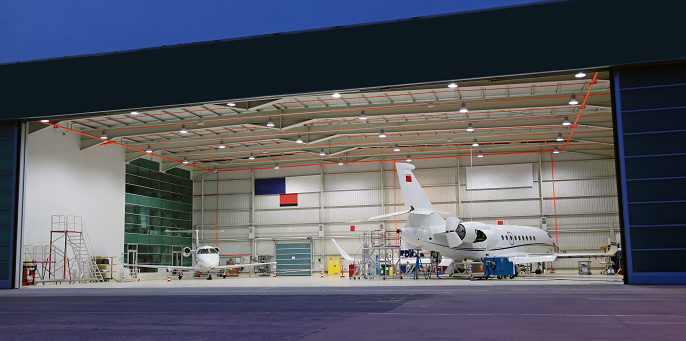
AIRLINE business in Nigeria and the West African region may soon heave a sigh of relief in the area of aircraft maintenance as the Nigerian Civil Aviation Authority (NCAA) has granted 7Star Global Hangar Ltd, an Aircraft Maintenance Organisation (AMO) the right to operate an all-inclusive Maintenance Repair and Overhaul (MRO) facility.
Commencement of maintenance at the MRO facility which once effective, will not only serve Nigerian airlines but the entire West Africa will save the region a whopping annual $1 billion used in flying aircraft offshore on the maintenance of checks carried on different types of aircraft.
Speaking on the feat, the Chief Executive Officer of 7Star Global Hangar, Isaac Balami, who coincidentally is an aircraft engineer and former National President for Aircraft pilots and Engineers in Nigeria for eight years, cited the numerous benefits of having such a facility to airlines in Nigeria and the entire region.
According to Balami “7StarGlobal is the first independent privately owned MRO in West and Central Africa. I say independent because it is a stand-alone and we were registered in 2012 and since then for about nine years, we have been back-to-back pursuing our license and Variation with the Nigerian Civil Aviation Authority. We are happy today to announce that after over 15 months of the NCAA reviewing our variation and our operational specifications (OpsSpecs) and also expanding our capability list in Wheels and Brakes, NDT etc, we have finally finished our phase five which is the last stage in the certification process and we have been granted final approval.
“The huge capital in aircraft maintenance we often experience, amounting to over $1billion that is annually spent in West Africa alone is going to help to create jobs here in Nigeria.”
On the maintenance specification, Balami while saying the organisation can carry out operations as permitted by the NCAA further declared “We are happy to say goodbye to four years Inspection/Maintenance on Augusta 139 helicopters which most VIPs, even the presidency operates. Most oil and gas companies (Mobil, Shell, and Chevron) operate it. We also have EC 155 up to 6000 hours/12 years’ inspection, on the Learjet 45, about 9,600 hours’ inspection. Read More
Air Fares Spike as Aviation Fuel Nears N300/litre at Airports
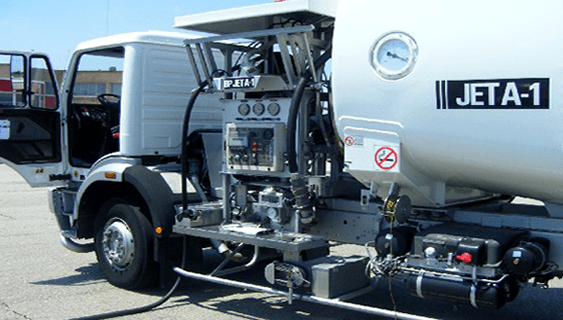
Despite an upswing in the global price of crude oil and attendant blessings for oil-producing countries, the price of aviation fuel has spiked nationwide and much to the pains of airlines and travelers in Nigeria.
A fact-check showed that aviation fuel, also called Jet A-1, has lately sold for between N215 at airports in the South and N300/per litre in low traffic aerodromes in the Northern region of the country. The price had risen in April 2021 to between N250 and N275 per litre, which was about a 200 per cent increase from 2016, when it was sold at N110. It rose to N200 in 2018, hovering around N160 and N170 in 2019.
An average 50 per cent surge in fuel cost, a critical component of airlines’ operation, has also forced airlines to increase airfares with an average Economy Class ticket on less than an hour flight selling for over N65,000.
There are fears of fuel contamination in some quarters, which experts say, could threaten flight safety. Engr. Femi Adeniji of Tropical Arctic Logistics, a helicopter operator, said any jet fuel cheaper than N270 could have been contaminated.
Chairman and CEO of United Nigeria Airlines, Dr. Obiora Okonkwo, decried the development, which he said, has added to the cost of operation.
Okonkwo, whose airline debuted about four months ago, said: “We started operations at N160 per litre barely four months ago and when you move from that price to over N270 within two months, you should expect whatever we are experiencing now. Aviation fuel alone takes between 30 to 40 per cent of airlines’ costs. This is cause for grave concern to everyone.”
The Guardian learnt that the extra burden on end-user airlines and travellers alike is not unconnected with the naira-to-dollar exchange rate, logistics hiccups of importing the product through chaotic Apapa ports, and more expensive distribution to nationwide airports by road. Read More
Ethiopian Airlines begins Operations With Fully Vaccinated Crew
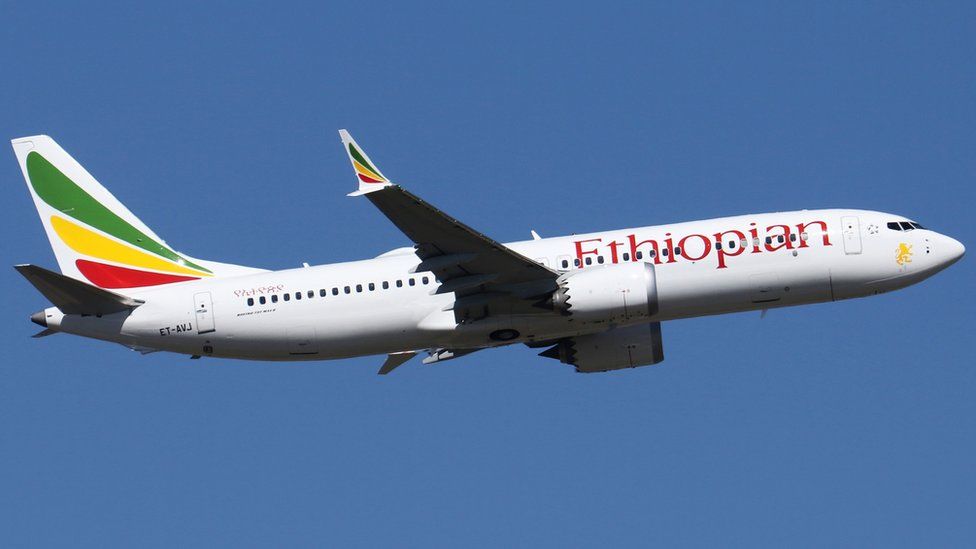
Ethiopian Airlines Group, Africa’s largest carrier, has started operating flights with fully vaccinated crew against COVID-19 to keep travelers safe in light of the pandemic. Ethiopian Airlines Group CEO Mr. Tewolde GebreMariam said “We are pleased to operate flights with fully vaccinated crew – a significant step in protecting our employees’ and customers’ health safety. We are encouraged by the increasing number of passengers travelling for business, VFR and tourism supported by the confidence of vaccination across the world.”
“We have been squarely focused on working very hard to ensure the safety of our staff and passengers since the pandemic broke out and this is another testament to our continued commitment. We have bought and imported more than 37,000 vaccine shots for our employees and stakeholders.”
Ethiopian has been rigorously implementing COVID-19 precautionary measures including the launch of its own testing and isolation center and digitization of its operation among others. It has been at the forefront in the fight against the pandemic carrying essential medical supplies and vaccines across the globe as well as repatriating stranded people back to their home.
Ethiopian Airlines (Ethiopian) is the fastest growing airline in Africa. In its seven decades of operation, Ethiopian has become one of the continent’s leading carriers. Ethiopian commands the lion’s share of the pan-African passenger and cargo network operating the youngest and most modern African fleet. Ethiopian is currently implementing a 15-year strategic plan called Vision 2025 that will see it become the leading aviation group in Africa with seven business centers: Ethiopian Domestic and Regional Airline; Ethiopian International Passenger Airline; Ethiopian Cargo; Ethiopian MRO; Ethiopian Aviation Academy; Ethiopian In-flight Catering Services; and Ethiopian Ground Service. Ethiopian is a multi-award winning airline registering an average annual growth of 25% in the past seven years.
The carrier, regarded as the most profitable airline in Africa lost $550 million in 2020 because of international flight restrictions due to the COVID-19 pandemic, the company’s CEO disclosed recently. GebreMariam said the revenue loss has caused the national carrier to cut 90% of international flights. “We are forced to fly to only 19 international destinations out of 110 destinations that the airline used to fly to pre-COVID 19 times,” local newsmaker Walta Information Center quoted Tewolde at a news conference. “Our cargo and maintenance services are doing well.” The international aviation industry has lost $52 billion, with Africa losing $4.2 billion, he said.
The virus originated in Wuhan, China in December, and has spread to at least 184 countries and regions. The epicenter has shifted to Europe, while China has largely come out of the crisis. It has infected more than 1.38 million people worldwide, while nearly 293,000 have recovered, according to data compiled by U.S.-based Johns Hopkins University. An excess of 78,200 patients have died. Despite the rising number of cases, most that become infected suffer mild symptoms and make a recovery.
Sources: Tribune Online, The Guardian , AirInsight