
FEC Approves N92.123bn Contract for Abuja 2nd Runway Project
The Federal Executive Council (FEC) yesterday, approved a total of N92,123,175,305 billion for the construction of a second runway at the Nnamdi Azikiwe International Airport (NAIA) Abuja.
Minister of Aviation, Hadi Sirika, disclosed this to State House Correspondents after the weekly virtual FEC meeting, presided over by President Muhammadu Buhari, at the Presidential Villa, Abuja. He said the entire sum would be spread over a number of works to be carried out at the airport, over a period of 12 months.
The approval came 24 hours after the inauguration of the new terminal building of the Murtala Mohammed International Airport (MMIA), Lagos.
President Buhari while inaugurating the new terminal building of the MMAI in Lagos on Tuesday had instructed the Minister of Finance, Budget, and National Planning, Mrs. Zainab Ahmed, to source funds for the second runway project for the NAIA, Abuja.
However, when asked how the government would raise funds for the project, Sirika said the administration would use the same pattern it had used to raise funds for all of its other projects across sectors to deliver the runway in 12 months. FEC also approved over N14 billion to train 50,000 non-graduates of N-power for a period of nine months.

Minister of Humanitarian Affairs, Disaster Management and Social Development, Sadiya Umar-Faroq, in her briefing said over N14 billion would be used to engage four Federal Government agencies in the training of the non-graduates.
She said at the end of the training, the beneficiaries would be handed starter packs to start up their businesses. Read more
Foreign Airlines’ Trapped Funds In Nigeria Hit N117bn
From $147 million (N61 billion) which the International Air Transport Association (IATA) said was the total foreign airlines’ fund trapped in Nigeria in August 2021, the figure has now nearly doubled, reaching $283m (about N117.6bn).
It was reported that the money was accumulated from the sale of tickets by about 30 airlines flying to the country.
In line with the bilateral air service agreements (BASAs) with countries, airline tickets are mostly sold in naira while the airlines would repatriate the funds in dollars through the country’s central bank.
The federal government under the Muhammadu Buhari administration had in 2018 cleared $600m blocked funds but the figure began growing with IATA lamenting the blockade.
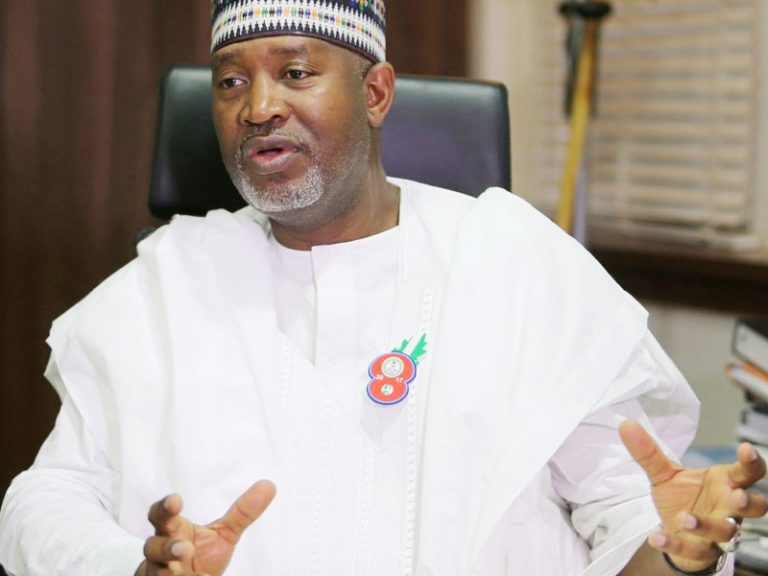
The Minister of Aviation, Senator Hadi Sirika, confirmed the new figure of $283m when he spoke in Lagos during the commissioning of the Murtala Muhammed International Airport (MMIA) New terminal.
He said, “Mr. President, the aviation business suffers from issues of access to foreign exchange by local and foreign airlines and the ability to repatriate blocked funds.
“Nigeria currently holds $283m of foreign airlines funds blocked in the country. I would like to humbly request the support of the Central Bank of Nigeria, through the directive of Mr. President, to prioritize access to forex for all carriers both local and foreign and to work out a mechanism to clear the existing backlog urgently and prevent subsequent build-up.”
IATA’s Director-General, Willie Walsh, had recently said the blockade of airline revenues “contravenes international conventions and could slow the recovery of travel and tourism in affected markets as the airline industry struggles to recover from the COVID-19 crisis.”
President Biden Urged to End Mask Mandates on Planes and Pre-Departure Testing for International Travellers
US airlines say the restrictions “are no longer aligned with the realities of the current epidemiological environment”
The chief executives of American Airlines, United Airlines, Delta, and other carriers have urged US President Joe Biden to end a federal mask mandate on airplanes and international pre-departure testing requirements.
The airline executives, including the chairman of Southwest Airlines and JetBlue’s CEO, said in a letter the restrictions “are no longer aligned with the realities of the current epidemiological environment.”
The Biden administration this month opted to extend current Covid-19 mask requirements at airports, train stations, rideshare vehicles, and other transit modes through April 18. The order was set to expire on March 18.
“It makes no sense that people are still required to wear masks on airplanes, yet are allowed to congregate in crowded restaurants, schools and at sporting events without masks, despite none of these venues having the protective air filtration system that aircraft do,” the airline letter said.
The White House declined to comment, but earlier this month said the Centers for Disease Control and Prevention (CDC) was working to help develop “a revised policy framework for when, and under what circumstances, masks should be required in the public transportation corridor.”
Several airlines in Europe have relaxed their mask-wearing rules in recent weeks, including Easyjet, British Airways, Jet2.com, and Tui Airways. However, Aer Lingus and Ryanair still require passengers to mask onboard aircraft, and Dublin Airport asks that passengers wear masks throughout their airport journey. Read more
As Aviation Fuel Crisis Lingers, Airport Hydrant System Suffers
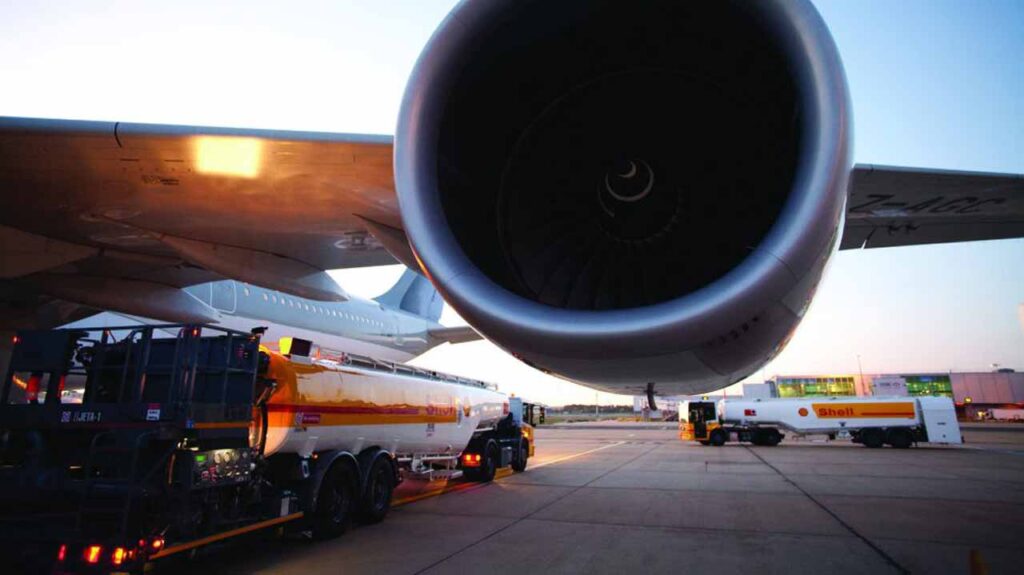
The massive flight disruptions in the last few weeks triggered by the scarcity and high cost of Jet A1 fuel are no doubt attracting the needed attention. The House of Representatives has intervened and summoned those concerned to explain why the price of aviation fuel has gone through the ceiling, with a liter selling above N600.
The increase is about 300 percent within a year and it has put airline operators under pressure in conveying passengers.
In finding a solution to the crisis, the stakeholders who converged at the House of Representatives sitting on Monday were the Group Managing Director of the Nigerian National Petroleum Corporation (NNPC), Mele Kyari, was present, agreed at N500 per liter; an experiment that would run for three days.
Maybe as analysts say, this temporary compromise might avert the shutdown of the sector as warned by the Vice President of the Airline Operators of Nigeria (AON), Mr. Allen Onyema, who is the chairman/CEO of Air Peace.
What happens after three days remains a matter of conjecture. But what is clear is that the issue still remains unresolved and will continue to rear its ugly head.
This is not the first time Nigeria would be faced with an acute fuel shortage in the aviation sector which crippled flight operations.
The same crisis was experienced in 2016 which also affected international flights as foreign airlines had to either suspend flights because they were not sure of getting fuel at the destination point which is Nigeria; or they go to Accra, Ghana, and other neighboring countries to refuel.
The situation was also not different in 2017 when operators accused some unnamed “cartels” of hiking fuel prices at will. It was N200 at that time per liter, yet airlines still whined.
Four years later, the price has virtually quadrupled, selling as high as N600 per liter. Read more.
Source: Daily Trust; Sunnewsonline; Independent