
Customs Restores VAT, Multiple Charges on Imported Aircraft, Spare Parts
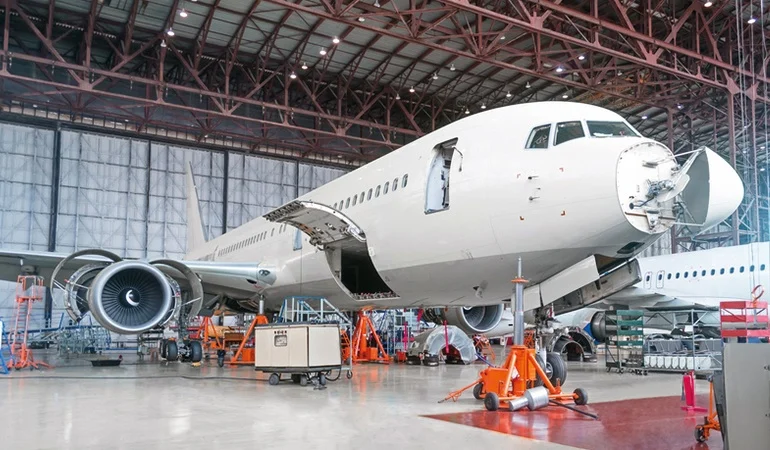
About three months after the implementation of zero Value Added Tax (VAT) on commercial aircraft and spare parts, the Nigerian Customs Service (NCS) has allegedly restored the collection of 7.5 per cent VAT and sundry charges from operators.
Airline operators told The Guardian that Customs had lately opened a new window of charges that is comparatively more expensive and complicated than the former regime.
Indeed, it has been a hard-fought battle that dates back to 2016 to exclude aviation from VAT, as it is the case with general transport in other parts of the world. Though the Ministry of Aviation rallied against the charges as part of measures to support the local airlines, the Ministry of Finance and NCS have continued to impose charges on operators.
Airline Operators of Nigeria (AON) had in June 2021 applauded the removal of mandatory charges that airlines had erstwhile paid, following the intervention of the National Assembly.
Vice-Chairman of the association, Allen Onyema, had said the AON, at a Senate hearing, presented the issue of the partial implementation of the Finance Act 2020, which prohibits the payment of duties and VAT on imported aircraft and aircraft spares by the Customs Service, and “thankfully, we no longer have to pay VAT on aircraft”.
But as of last week, VAT collection has resumed.
Chief Operating Officer (COO) of a local airline said Customs has started demanding VAT, “except you notify them in advance before the process of importing a spare part begins.
“As it is, you cannot be in need of a spare part, import it immediately and not pay VAT. No! Customs has introduced the Import Duty Exemption Certificate (IDEC) process that requires you to apply for exemption and get approval before importation.
“Unfortunately, it doesn’t work that way in aviation. It means an aircraft will have to be grounded for two to three weeks because of a spare part of less than $100. To avoid the loss, I have to order my spare parts, pay their VAT, and move on. That is how complicated the matter is in Nigeria. As an operator, everything is skewed against. It is just so unfortunate,” he said. Read more
IATA Chief on Achieving Net-zero Target: ‘The Ball Can’t Keep Getting Passed Around’
Exclusive: Oil majors need to ramp up the production of sustainable aviation fuels to help airlines cut emissions, Willie Walsh says

Airline partners from oil companies, to engine makers, plane manufacturers, air traffic controllers, and others must do their part in helping the industry to achieve its accelerated climate goals, according to the director-general of the International Air Transport Association.
Mr. Walsh pressed these partners to contribute to helping the industry achieve its net-zero carbon emissions goal, rather than laying the responsibility and cost squarely on carriers’ shoulders as they seek to change public perceptions about the industry’s environmental impact.
“The ball can’t keep getting passed around, that’s the issue,” Willie Walsh told The National on the sidelines of last week’s Iata annual general meeting in Boston.
Among the intermediate steps towards reaching net-zero carbon emissions by 2050, the most important will be for oil majors to ramp up the production of sustainable aviation fuels (SAF) available to airlines, he added.
At the Iata meeting, member airlines pledged to achieve net-zero carbon emissions from their operations by 2050, aligning air transport with the objectives of the 2015 Paris Accord to limit global warming to 1.5°C. The first milestone towards that target is in 2025, when SAF production, with appropriate government policy support, is expected to reach 7.9 billion liters or 2 percent of the total fuel requirement.
Airlines are committed to using more SAF, but it was “very difficult” to get a sufficient supply of sustainable biofuel, and fuel suppliers have to be pushed to produce more of it, Mr. Walsh said. Current engines can theoretically run on 50 percent sustainable blends.
“Flights are operating with sustainable biofuels, but it’s not at 50 percent; it’s at about 30 percent because that’s all the supply that they can get,” he said.
Mr. Walsh criticized some oil companies’ announcements to produce extra liters of SAF without any follow-up or action, saying the importance of climate goals has now “gone beyond words”.
“People see that the problem is the airline. They don’t look behind the airline to say, ‘Well, hang on, we don’t produce the fuel, we don’t build the engines, we don’t build the aircraft’,” Mr. Walsh said. “It’s not that you have to push the airlines. We’re there.”
The IATA chief also urged air navigation service providers to take action to help the industry reach its climate target. Read more
Safety Concerns In Aviation As Skilled Staff Dump Agencies
The Nigerian civil aviation industry may face a major challenge very soon if the ongoing resignations of skilled personnel in the agencies are not nipped in the bud.
An investigation by Daily Independent indicates that the Nigerian Civil Aviation Authority (NCAA), the Nigerian College of Aviation Technology (NCAT), Zaria, and the Nigerian Airspace Management Agency (NAMA) are facing a dearth of professionals, which is currently affecting their performances.
It was gathered that while some of the professionals like pilots, engineers, air traffic controllers, air traffic communicators, aeronautical information managers, cabin crews, and others have resigned from their duty posts to seek employment in private organizations in the sector, especially the airlines because of poor remuneration, others retired from the system while getting a replacement for them had been a herculean task.
NCAA, for instance, is the regulatory agency of the aviation industry and is expected to have highly skilled manpower in sufficient number, but its number of inspectors had dropped in recent times.
The drop in the number of skilled personnel was attributed to poor take-home packages for the professionals.
Some of its skilled manpower, it was learned, have taken up jobs in some of the airlines, while others seek greener pastures outside the country.
It was also gathered that NCAA’s staff condition of service (CoS) that was revised since 2016 was yet to be implemented to date because of the paucity of funds, occasioned by the outbreak of COVID-19 pandemic.
Daily Independent learned that the agency’s staff are still being paid based on the 2013 CoS. Read more
New Report Claims Global Pandemic Will Damage Aviation’s Job Appeal
If it is to be believed, more than 60% of the world’s aviation leaders fear the pandemic will discourage people from joining the aviation sector, according to a new global survey by a specialist transport sector recruitment agency.
GOOSE Recruitment says that its ‘Leaders in Aviation Report 2021’ captures the significant demands placed on aviation leaders during the global pandemic with many fearing redundancy, furlough, and the future prospects of their careers and reward.
The report raises questions in aviation about leadership skills, the future of work, reward, career and the sector’s recovery from the perspective of global aviation leaders. Highlights include:
- 59% of aviation leaders believe the pandemic has had a long-term impact on reward in the aviation sector. This increased to 64% in Europe, Middle East and Africa
- 43% believe the pandemic has impacted their career for the worse
- 79% have had to adapt their leadership style during the pandemic
- 64% of leaders think it will take two to four years for the aviation sector to make a full recovery to pre-COVID levels
- 43% of leaders expect to increase the size of their teams in the next six months, but 22% still expect further cuts to staffing levels
- 51% thought that remote working would have no impact on reward in aviation
- 82% would be confident to change jobs in the next 12 months
- 86% of aviation leaders believe the future of work will be a hybrid between office and remote working, and just 2% saw it becoming fully remote.
The survey found that the top areas of improvement in leadership through the pandemic were communication, remote leadership, and crisis management skills.
“Communication has truly never been more important in our personal and business lives and traditionally many leaders have found it less effective and more difficult to lead and communicate electronically,” says Mark Charman, CEO, and founder of GOOSE Recruitment.
“Developing remote leadership, communication and crisis management skills will be invaluable and will be attractive qualities that many businesses will source in the future.”
A significant 42% believed they would need to adapt their leadership style further and 78% agreed that employees will expect to be led differently post-pandemic.
“Our new reality will demand more from leaders, taking on board what they have learned in this time of crisis, listening to their employees, creating more empowerment with the goal of creating a better future for aviation,” notes Chapman.
To download a copy of the Leaders in Aviation Report 2021 click here or visit www.goose-recruitment.com/leaders-in-aviation-report-2021
Ethiopian Airlines Resumes Flight to Enugu, Nigeria

Ethiopian Airlines Group, the largest pan African airline, has resumed weekly passenger services to Enugu, Nigeria.
The flights are operated on Wednesday, Friday and Saturday. Ethiopian is one of the oldest carriers flying to Nigeria and has been serving the country since 1960, strengthening trade, cultural and tourism ties between Nigeria and the rest of the world.
Passengers from Enugu will have direct flight connections to many destinations in Africa, Middle East, Asia, South America and Europe with the vast Ethiopian network and modern fleet and enjoy unique Ethiopian hospitality. Mr. Tewolde GebreMariam, Group CEO of Ethiopian Airlines said “Nigeria has always been and continues to be one of our important destinations in West Africa. We are continually improving our products and services to meet our customers’ expectations and the resumption of services to Enugu is key to reach our customers in different parts of Nigeria. We thank the people and the government of Nigeria for their continued support in restarting our service to Enugu.” Passengers from our four gateways in Nigeria – Lagos, Abuja, Kano and Enugu – now have the opportunity to fly to more than 130 Ethiopian global destinations in five continents.
Ethiopian became the first international carrier to fly to Enugu when it commenced flight in 2013. The service to Enugu was suspended for two years as the airport was undergoing renovation.
Sources: The Guardian Nigeria, The National News, Daily Independent, African Business Communities